What Should a Company History Book Include? A Definitive Guide
A company history book is not a brochure. It's not a timeline pinned to a boardroom wall. And it's not a LinkedIn post stretched to two hundred pages.
Done well, it's a strategic asset – something that works for your brand in client meetings, at recruitment events, in lobbies, and on the shelves of people who matter to your business. Done badly, it gathers dust.
The difference between the two comes down to what you put inside.
If you're planning a company history book (for an anniversary, a milestone, or simply because the founders are getting older and the stories are starting to fade) here's what belongs in it.
A Founding Story With Texture
Every company has an origin story. Most of them, as told in annual reports, are bland. "Founded in 1974 by two visionary entrepreneurs..." That's not a story. That's a caption.
A good founding narrative has texture. It includes the mess, the luck, and the personality. Where were the founders when the idea struck? What were they running from, or toward? What nearly went wrong in the first year? In the tenth year?
The Salvatori book tells the story of a man who left Corsica for Venezuela with 35 francs in his pocket, and ended up building a department store empire. Some may see that as simply a business origin story, but to us, it’s a life. And that's exactly how we made the book compelling. The company's history becomes inseparable from the human drama that created it.
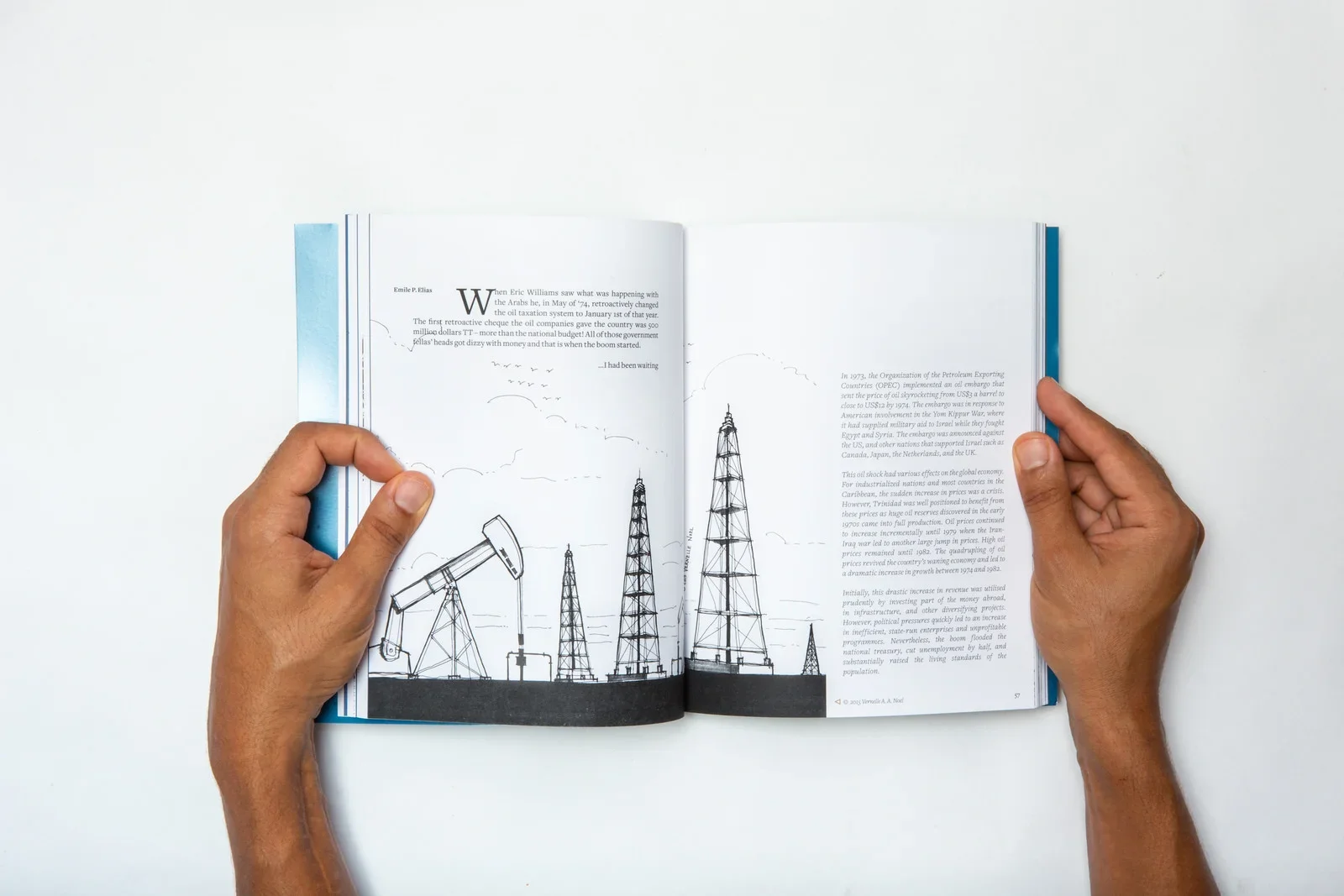
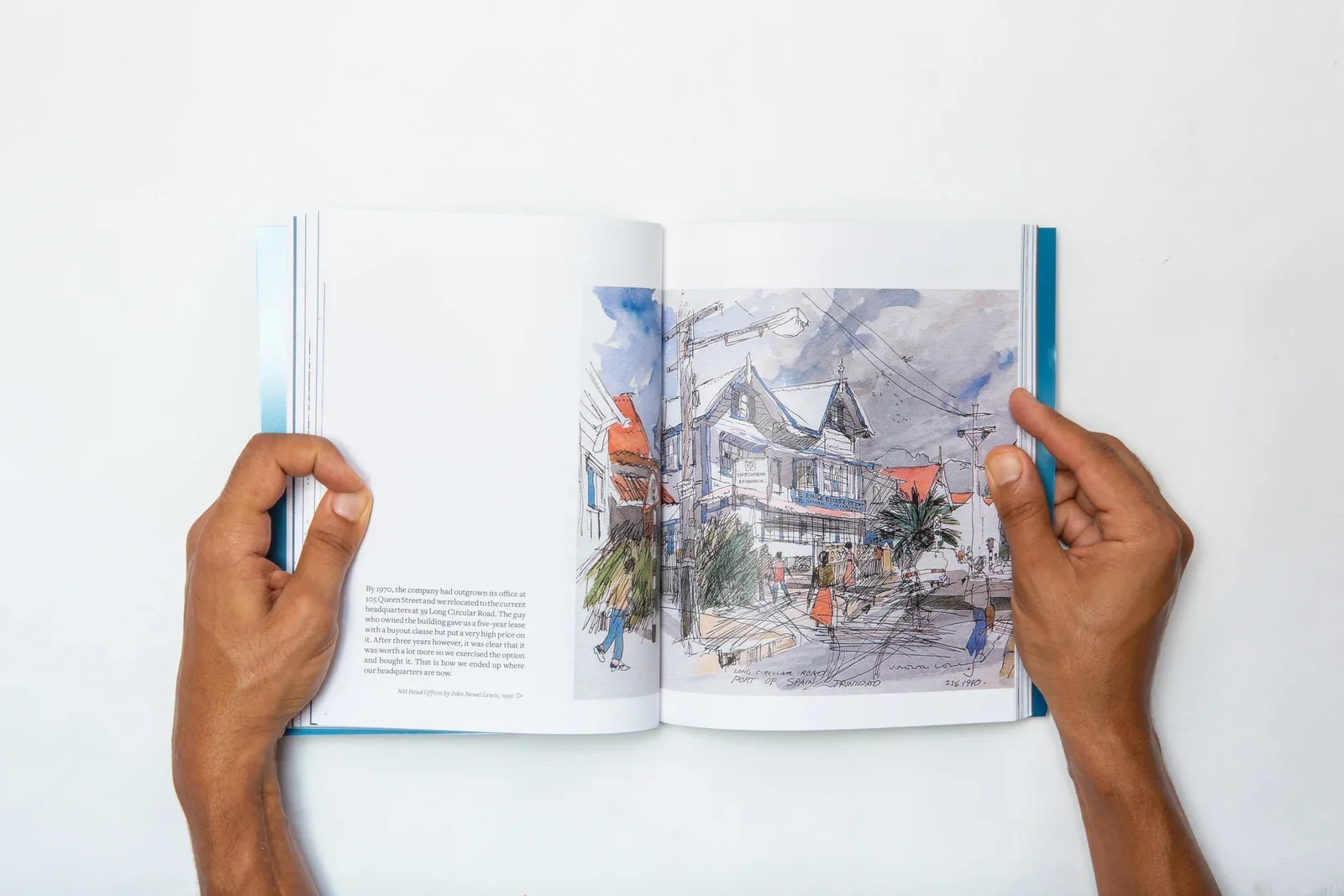
When we worked on the Emile Elias Group's 50th anniversary book, we went as far back as possible, back to the personal histories and circumstances that made it inevitable. The deeper you dig, the richer the narrative.
Voices From Every Level
This is where most corporate histories go wrong. They interview the CEO and the board, paste in a few quotes, and call it a day.
Yet, so many of the company’s most interesting stories also live with the people who were there on the ground floor – literally. The foreman who's been with the company since the early days. The first receptionist. The engineer who solved a problem no one else could. Their perspectives are vivid, specific, and human in a way that boardroom reflections often aren't.
For the Emile Elias book, Plantain deliberately interviewed people at every level of the company. The result was a narrative that felt like a real, breathing workplace full of personalities, relationships, and small moments that revealed what the culture actually looked like, not just what the mission statement claimed.
Visual Archives, Not Just Illustrations
Photographs belong in a company history book, but they shouldn't be afterthoughts – stock-image-style portraits dropped into the margins to break up blocks of text.
The visual archives are part of the story. Old site photographs. Blueprint sketches. Handwritten correspondence. Promotional materials from the 1970s. These documents carry often overlooked meaning.
For the Uganda Railways history, visual archives from custodians around the world – photographs of the original railway construction, station life, and the people who worked the rails – were woven into the narrative as primary sources, not decoration.
A well-designed company history book treats its images with the same editorial rigour as its text. Each one earns its place.
Cultural and Historical Context
A company is shaped by the economy, the politics, the culture, and the geography of its time and place. A good company history book acknowledges that, and uses it to give the business story depth it couldn't have on its own.
The Uganda Railways book is a clear example. The story of the railway is inseparable from the story of colonialism, independence, and East African economic development. By situating the company's history within that larger narrative, the book becomes a piece of cultural history, which is exactly what the Cross-Cultural Foundation of Uganda wanted it to be.
Even for a smaller company, context matters. What was happening in your industry when the business started? What economic forces shaped its growth? What social changes affected its workforce? These threads give readers (whether they're employees, clients, or family members) a reason to care.
Design That Reflects the Brand
The company history book should look like the company it represents. For the Emile Elias Group, the packaging itself referenced the construction industry, a detail that clients and stakeholders noticed and remembered.
Typography, colour palette, paper stock, binding – these choices communicate something about who you are as a company. A creative agency's history book should feel different from a construction firm's, which should feel different from a luxury brand's. If the design doesn't reflect the subject, something has gone wrong.
Repurposable Content
A well-planned company history book generates material that can live far beyond the book itself. This is worth thinking about from the outset, not as an afterthought.
The Emile Elias Group used spreads from their book as backdrops at 50th anniversary events. Interview footage was used for a short film that can now be found on the company’s website. And archival material can feed social media campaigns, internal communications, recruitment materials, and client presentations.
Think of the book as the centrepiece of a larger ecosystem. The research, photography, and design work that go into it can be repurposed in dozens of ways – for events, for décor, for digital platforms. Every dollar spent on the book does double or triple duty if you plan it that way.
A Clear Sense of Purpose
Before you write a single word, answer this question: who is this book for, and what should they feel when they finish it?
Is it for clients, meant to communicate credibility, heritage, and the depth of your track record? Is it for employees, a tool for onboarding, culture-building, and pride? Is it for the founders' family, a personal tribute wrapped in a corporate story?
The Waldron family commissioned their book, which chronicles both a family history and the rise of the Cher-Mère beauty and wellness brand, with a specific purpose: transferring knowledge and values across generations. That clarity of purpose shaped every editorial and design decision.
Your company history book needs the same. Without it, you'll end up with something that tries to please everyone and moves no one.
Where to Start
If your company has an anniversary approaching — or if the people who built it are getting older and the stories are at risk — the time to start is now.
Get in touch with Plantain to begin a conversation about your company's book. Browse our portfolio to see the range of company and family history books we've created. Or read more about why preserving your corporate history matters.