
Planning a Company Anniversary? Here's Why a Commemorative Book Outlasts an Event
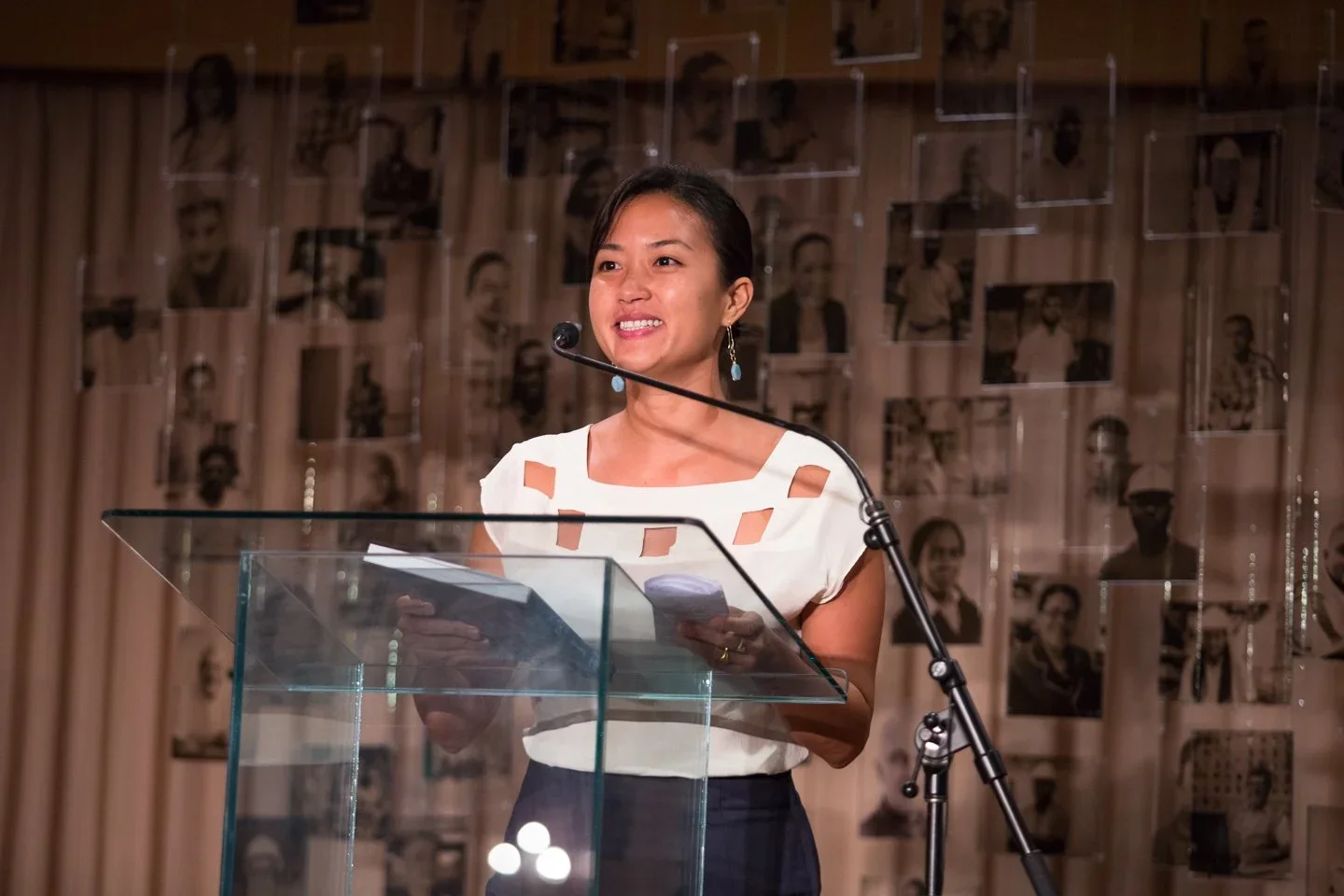
Here, our very own co-founder, Felicia Chang, presents at one of our client’s 50th anniversary event. But note the portraits in the background, which were initially taken for the book.
Your company is turning 25, or 50, or 100. There will be a dinner. Perhaps a conference. A keynote speaker, a slideshow of old photographs, some speeches that run too long. Employees will raise glasses. Clients will attend. It will be, by all measures, a success.
And within six months, almost no one will remember it.
Events are wonderful. They create energy, connection, and a shared sense of occasion. But they are, by nature, ephemeral. The caterers pack up. The venue gets booked for a wedding. The slideshow slides back into a forgotten folder on someone's desktop.
But a commemorative book? That stays. In the boardroom, or on a coffee table in a client's office, or in the hands of a new employee during their first week. Years from now, someone will pull it down, open it, and understand (in a way no event recap ever could) what your company is and where it came from.
What a Book Does That an Event Can't
Whereas an event centers around a moment, a book creates a record.
That distinction matters more than it seems. When a potential client visits your office and picks up your company history book from the reception table, they're holding your credibility in their hands. They can see the depth of your track record, the quality of your work, the calibre of the people who built your organisation. That's a very different experience from hearing about it in a pitch deck.
As we've explored in our piece on the power of corporate history, a well-crafted commemorative book can strengthen your position in contract negotiations, client relationships, and investor conversations. It tells people: "We're not new at this. We have a story worth telling, and we've told it with care."
Internally, the effect is just as powerful. Employees who understand their company's history (the challenges it survived, the values that guided its decisions, the people who shaped its culture) tend to feel a stronger connection to the organisation and its mission. A company history book can serve as one of the most effective onboarding tools you'll ever produce.
The Book as Anniversary Centrepiece
The smartest approach is to plan the book and the event together, so each amplifies the other.
The Emile Elias Group did this beautifully for their 50th anniversary. Plantain crafted a comprehensive company history book (10,000 copies were printed) and the material created during the project became the visual backbone of the anniversary celebrations.
Spreads from the book were used as backdrops at the anniversary events. Portraits commissioned for the book now populate the company's website portfolio. The research and interviews fed content across multiple channels.
The event lasted a night, but the book… it’s still in circulation, and still making impressions.
What Goes Inside
A commemorative anniversary book should include more than a timeline and some posed photographs. So much more can be told across the book’s pages, but the essentials are:
The founding story, told with real texture. Not a sanitised corporate narrative, but the human story of how and why the business came into being, including the near-misses and the luck.
Oral histories from across the organisation. Leadership perspectives matter, but so do the voices of people who were on the ground floor. For the Emile Elias book, Plantain interviewed employees at every level, and those conversations produced some of the most revealing material in the finished volume.
Visual archives treated as primary sources. Old photographs, documents, correspondence, and ephemera woven into the design as narrative elements.
Design that reflects who you are. A construction company's anniversary book should look and feel different from a luxury brand's. The Emile Elias book's packaging referenced the construction industry, and every material choice should tell the reader something about the company before they've even read a word.
The Content Lives On
One of the most overlooked benefits of a company history book is the secondary use of the material it generates.
Consider what a well-planned book project produces:
Professional photography (portraits, site visits), and archival digitisation that can be used across your website, social media, and marketing materials for years.
Interview recordings and transcripts that can feed internal communications, training materials, or future publications.
A researched, edited narrative of your company's history that can be excerpted for press releases, About pages, investor materials, and recruitment content.
Design assets (layouts, colour palettes, typography) that can inform your broader brand identity.
When we wrote about repurposing your company's history, we outlined how material collected during a book project can enhance corporate events, office décor, and online platforms. The book is the centrepiece, but the material it generates radiates outward in ways that compound over time.
Getting the Timing Right
If your company's anniversary is 18 months away, now is the time to start. A bespoke company history book (one with original research, oral histories, archival integration, and custom design) takes months to produce properly. Starting early gives you the luxury of doing it well, rather than rushing to meet an event deadline and compromising on quality.
If the anniversary has already passed, that's fine too. A retrospective book can be just as powerful, and the pressure of a fixed date is off.
And if there's no specific anniversary on the horizon, but the founders are getting older and the institutional memory is starting to thin – well, that's its own kind of urgency.
Where to Start
Get in touch with Plantain to start a conversation about your company's anniversary book. Browse our portfolio to see the range of company histories we've produced. Or read more about why recording your company's history matters.
The dinner will be lovely. Make sure there's something left on the shelf when it's over.

Content we created for the book was eventually used on the company’s website.