What Does It Actually Feel Like to Work With Plantain? Our Process, Explained
You've been thinking about it for a while. Maybe years. The stories your mother tells at Christmas. The photographs in that box under the bed. The company your grandfather built from nothing. You know they deserve to be captured properly, in something that is lasting and beautiful, but the prospect of actually starting feels enormous.
What would it involve? How much of your time would it take? Would you have to dig through dusty archives alone?
Here's what happens when you work with Plantain, from the first conversation to the moment the book arrives.
It Begins With a Conversation
No packages to choose from a dropdown menu. Just a conversation.
We want to understand what matters to you, what prompted this decision. Was it a milestone birthday, a family reunion, a realisation that your parents won't be around forever? What kind of book do you imagine when you close your eyes? Who is it for?
When the Waldron family approached Plantain, their motivation was specific: they saw the book as a way to transfer knowledge and values across generations – a prerequisite, as they put it, for intergenerational wealth. That clarity shaped every decision that followed.
Other clients arrive with something less defined, a feeling that the time is right, and maybe a vague sense that the stories are slipping away. That's fine too. The first conversation is about finding the shape of the project together.
Then We Enter Your World
This is where Plantain's process diverges from most memoir services. We don't simpluy assign you a writer and wait for interview transcripts. We like to immerse ourselves in your family's (or company's) world.
When the family of the late poet Ruby Waithe came to us, her full body of work had only recently been discovered, a box filled with 76 poems and written correspondence with the acclaimed playwright and Dartmouth College professor Errol Gaston Hill. Nobody in the family had known the extent of Ruby's literary life until after she passed. Our brief was to curate this material and design a tribute that honoured both the poet and the woman.
The design became a collaboration with Ruby's granddaughter, Teshira, an artist. We began by asking a question that guides many of our projects: What triggers memories of a person who is no longer with you? A colour? An image? A scent? That led us to photograph one of Ruby's favourite flowers in detailed scans, which now graces the cover against a hand-painted background by Teshira.
This kind of immersion is what allows us to design a book whose visual language and narrative grow out of the same place.
The Interviews
Oral histories are the beating heart of most Plantain projects. We don't use questionnaires or automated prompts. Our interviewers sit with your family members (in their homes, at their kitchen tables, or on a Zoom call, wherever they're most comfortable) and create the conditions for real stories to surface.
Good interviewing is a craft. It means knowing when to ask a follow-up question and when to just let a person speak. It means recognising when someone is circling around something important and giving them the space to arrive at it in their own time.
For the Emile Elias Group's 50th anniversary book, we deliberately cast the net wide. We spoke to people in leadership, as well as people at every level of the organisation. Their perspectives turned out to be among the most vivid in the finished book. The foreman who'd been there since the early days… The administrator who remembered the company's first office… Their voices humanised the story in ways that a boardroom-only account never could.
Crafting the Narrative
Once the interviews are transcribed and the archives mapped, the editorial work begins. This is painstaking, and it takes time.
The challenge is to build a narrative that reads naturally – sounding like the people it's about – while also being structured enough to carry a reader through. A family history book that reads like a corporate report has failed, regardless of how accurate the dates are. The voice has to feel warm, alive, and honest.
Sometimes the story follows a single protagonist. The Salvatori book traces one man's journey from Corsica to Venezuela to Trinidad, and the narrative has the sweep of a novel because the life did.
Other times, the story is choral. The Tobias Kinsale book traces a family’s roots as told to us by several branches of the family, and even makes use of archival research conducted out of London and Canada.
We work closely with you through this phase. You'll see drafts. You'll give feedback. Nothing goes to print that you haven't read and approved.
Design That Grows From the Story
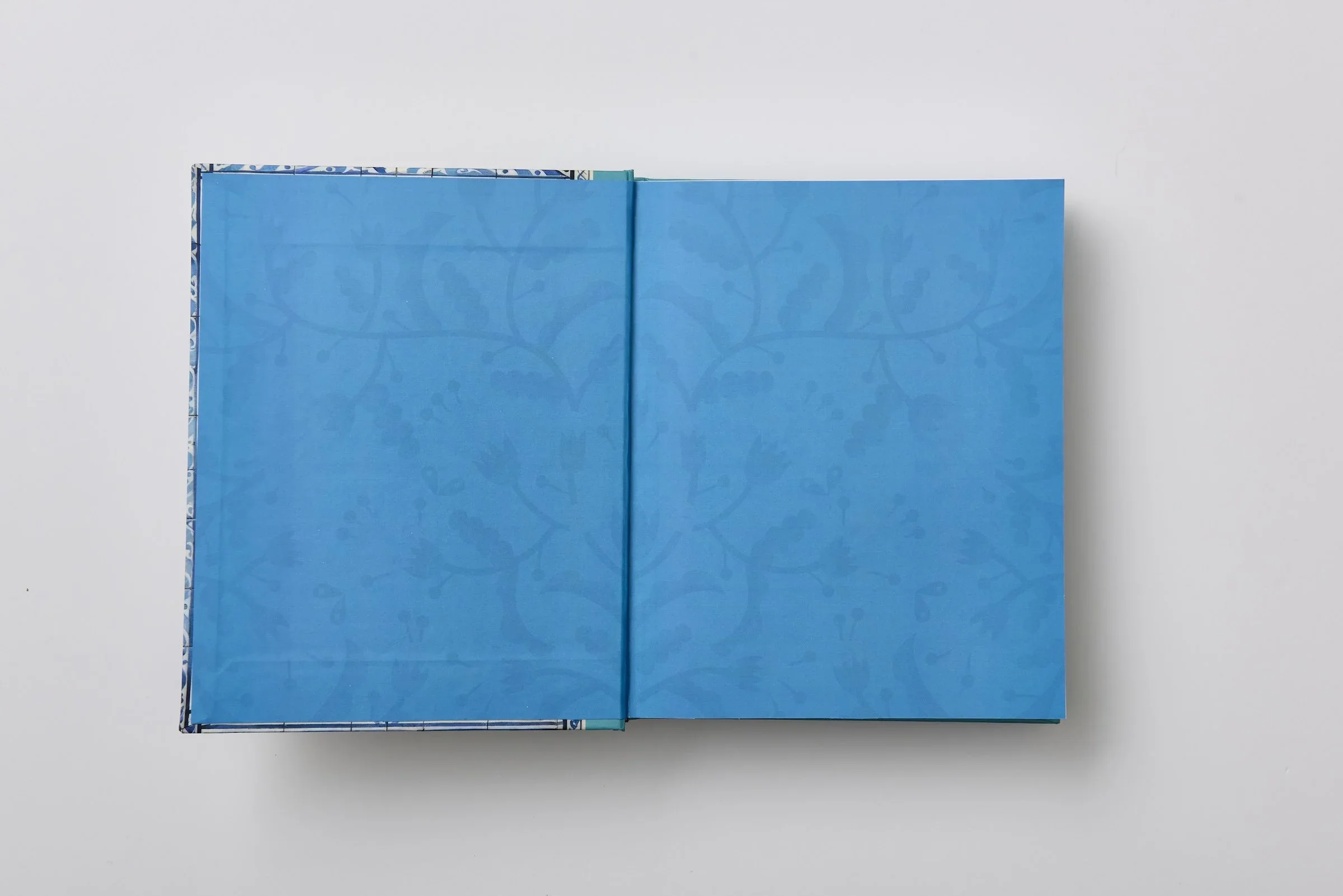
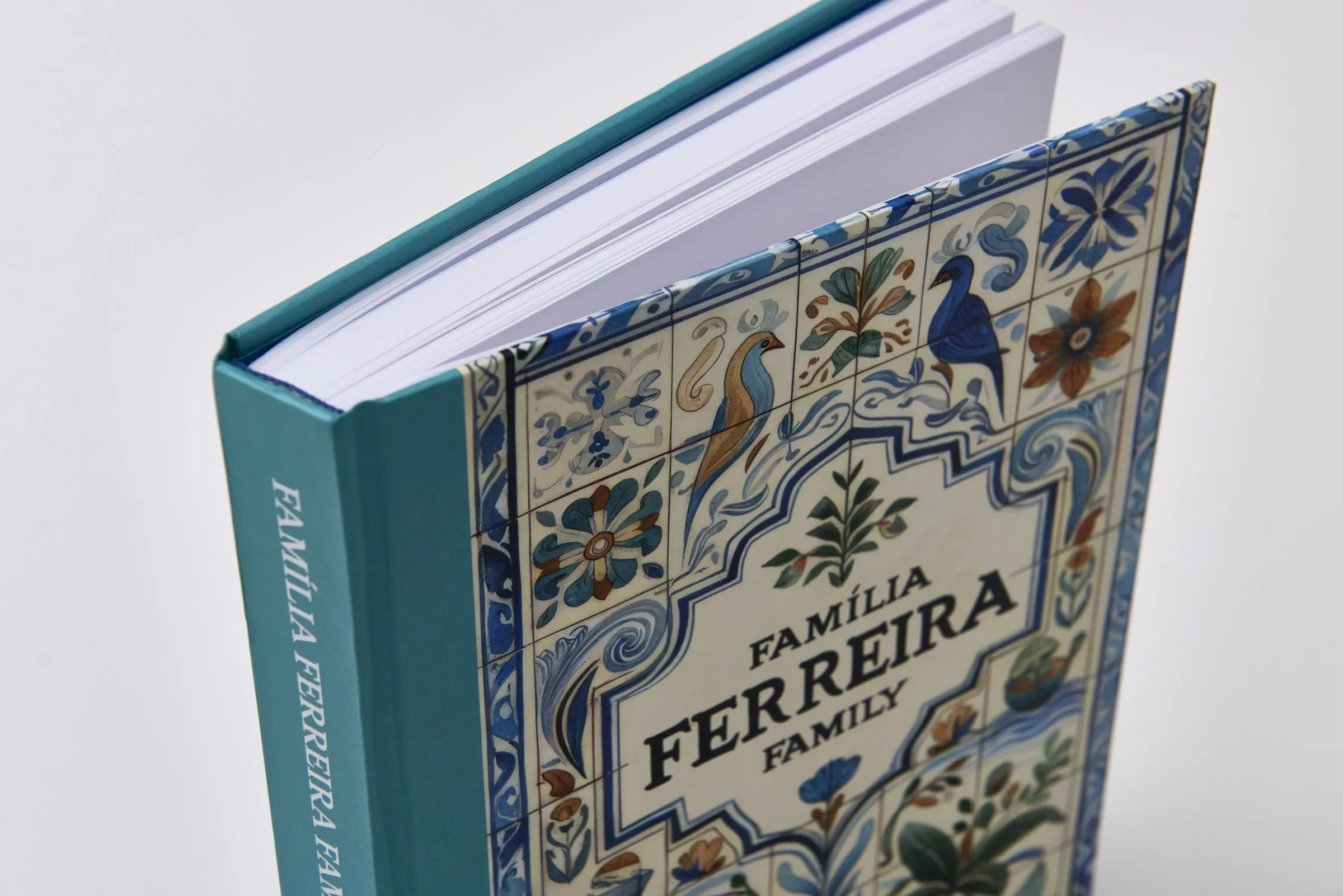
Here is where Plantain's approach is most distinctive. We don't apply a template. We don't have a house style. Every book's design language is drawn from the story itself.
For Edrisse Perkins's memoir – the story of a young Caribbean woman who travelled by ship to England in the 1950s to forge a career in nursing, overcoming personal and social obstacles along the way – we printed on Birch Paper, a textured stock chosen to add warmth and personality to the memorabilia woven throughout the book. The cover is a fine grey linen, quiet and dignified, suited to a woman whose personality was not showy.
For Doreen Ahow's memoir, the approach was completely different. Doreen's grandson, Damian, brought us her handwritten memoirs and dictated stories shortly after she passed. The design had to match Doreen's personality, so we used bold reds and striking fonts – ITC Caslon and Lora – on white uncoated paper. The book is vivid where Doreen was vivid, warm where she was warm. As Damian described it: "They customized the aesthetics of the book exactly as I wanted through their questionnaire about the subject's style and through my direct requests."
Printing, Materials, and the Finished Object
A book meant to last generations should feel like it. The paper, the binding, the cover material are decisions we take seriously.
We print at high-end presses where colour accuracy is precise enough to do justice to a photograph taken in 1914. The paper has texture, and the binding is built to survive.
Cover materials tell their own story, too:
The Salvatori book is printed on hot toffee linen with copper foil – warm and earthy. The memoir Luck Beat Obeah is bound in sapphire linen with red foil – bold and Caribbean. The Uganda Railways history has a matte hardcover with custom train cover art – institutional and dignified.
And Then You Hold It
There's something about holding your family's story in a single object, beautifully made, that takes people by surprise. Seeing a grandparent's face on the page next to a letter they sent in 1963. Turning to the chapter about a great-uncle and recognising his voice in the prose.
That reaction never gets old for us.
But the book's life doesn't end at delivery. The Waldron family’s book generated content the Cher-Mère brand now uses across its website and social media. The Emile Elias Group used spreads from their book as backdrops at anniversary events. The material you create with Plantain can live on in ways you haven't imagined yet.
What Our Clients Say
"Extremely Pleased! Plantain was very responsive to every question and request and genuinely cared about creating the perfect keepsake book for my family." — Damian Ahow
“There are many pleasant, funny, motivational takeaways from the book spanning 4 generations. Plantain did us well. Thank You immensely” – Cheryl Bowles
And so many more
Ready to Start?
If you've been carrying this idea around for a while, we'd love to hear from you.
Get in touch. Or take a look at our portfolio to see the kind of books we make. No two are alike, and yours won't be either.