Why Stories Die in Three Generations, And What You Can Do About It
Your great-grandchildren will almost certainly know nothing about you.
That sounds dramatic, but it's well-supported by research. Sociologists and family historians have observed for decades that family stories – the detailed, personal, textured kind – rarely survive beyond the third generation. Your children will know your stories because they lived alongside them. Your grandchildren will know fragments, filtered through retelling. Your great-grandchildren? They'll have a name on a family tree, if that.
It doesn't have to be this way.
How Stories Disappear
The mechanism is painfully simple. Stories pass between generations through conversation – at dinner tables, during car journeys or a stroll. But each time they're retold, they lose a little detail. The name of the village gets dropped. The year becomes approximate. The emotional texture smooths away until all that's left is a sentence: "Your great-grandmother came from Ghana."
Photographs help, but they degrade. They get separated from context. A box of prints in an attic, with no one alive who can name the faces, becomes meaningless. Digital files are worse: they sit in cloud accounts that expire, in formats that become unreadable.
And then there's the biggest factor of all: people move. Families disperse across cities, countries, continents. The daily proximity that once allowed stories to pass naturally between generations becomes a phone call, then a holiday visit, then a card at Christmas.
The stories don't vanish in a dramatic moment. They thin out gradually, like water being lost to evaporation, until one day there's nothing flowing at all.
Why It Matters More Than You Think
Plantain co-founder Felicia Chang explored this atHarvard, drawing on research inneuroscience andpsychology to examine how inherited memories shape identity. The findings are striking: children who know their family's stories (where their grandparents grew up, what challenges their parents overcame, how the family weathered difficult periods) tend to have a stronger sense of self, greater resilience, and a more grounded understanding of their place in the world.
Beyond the sentimental, it's deeply functional. Knowing your family's story gives you a narrative to locate yourself within. You understand that difficulty is survivable because your grandmother survived it. You understand that reinvention is possible because your grandfather did it. And you carry the accumulated wisdom of people who came before you.
When that knowledge disappears, something practical is lost alongside the emotional connection.
The Moment It Becomes Real
For many people, this stops being abstract the moment they become parents.
Plantain's founders experienced this first-hand. As they wrote in arecent reflection: "Does anything force you to reflect on the past and the meaning of family more than having a child? Suddenly, concepts like legacy and heritage are no longer abstract at all. They're sitting on your lap, pointing at a photo album and asking, 'Who's that?'"
Watching a child with her grandparents made something clear: the stories being told right now are the only bridge between this generation and the ones that will follow. Record them, and the bridge holds. Don't, and it collapses within a few decades.
"The stories we record today are the currency that will keep their bond alive for years to come."
That realisation changed how Plantain approaches its work. It sharpened the questions we ask clients: How do we find the stories that will engage all generations? How do we capture someone's essence in a way that a child – and eventually their own children – can grasp? Which stories help young ones develop the self-awareness they'll need to navigate their futures?
What You Can Do
You don't need to commission a book tomorrow (though you could). Here's where to start.
Have the conversations now. Not "someday." Not "when things calm down." Now. The people who carry your family's deepest stories are getting older. Every month you wait is a month of detail lost.
You don't need fancy equipment. A phone recording app works. But the quality of the conversation matters enormously. Ask about specific moments, not general topics. "Tell me about the first house you lived in" will unlock more than "Tell me about your childhood." Ask about smells, sounds, textures. Ask about the meal they ate on a day that mattered. The details are where the life is.
Plantain has published afree interview guide if you want help structuring these conversations.
Preserve your physical archives. That shoebox of photographs in the attic? The letters in the drawer? The newspaper clipping your mother keeps in her Bible? These are primary sources, and they're fragile.
As we explored in our article onfamily heirlooms, even the most ordinary objects can anchor a whole chapter of family history. A battered old cookbook tells you what your ancestors ate. A well-worn watch tells you something about their daily life. A handwritten recipe, a menu from a ball, or a piece of correspondence – each of these is a door into a world that will otherwise disappear.
Store them properly. Label them. And consider digitising the most important ones so that a single accident doesn't erase everything.
Think about the permanent record. Conversations fade from memory. Recordings get lost in phone storage. Even digital archives can become inaccessible over time.
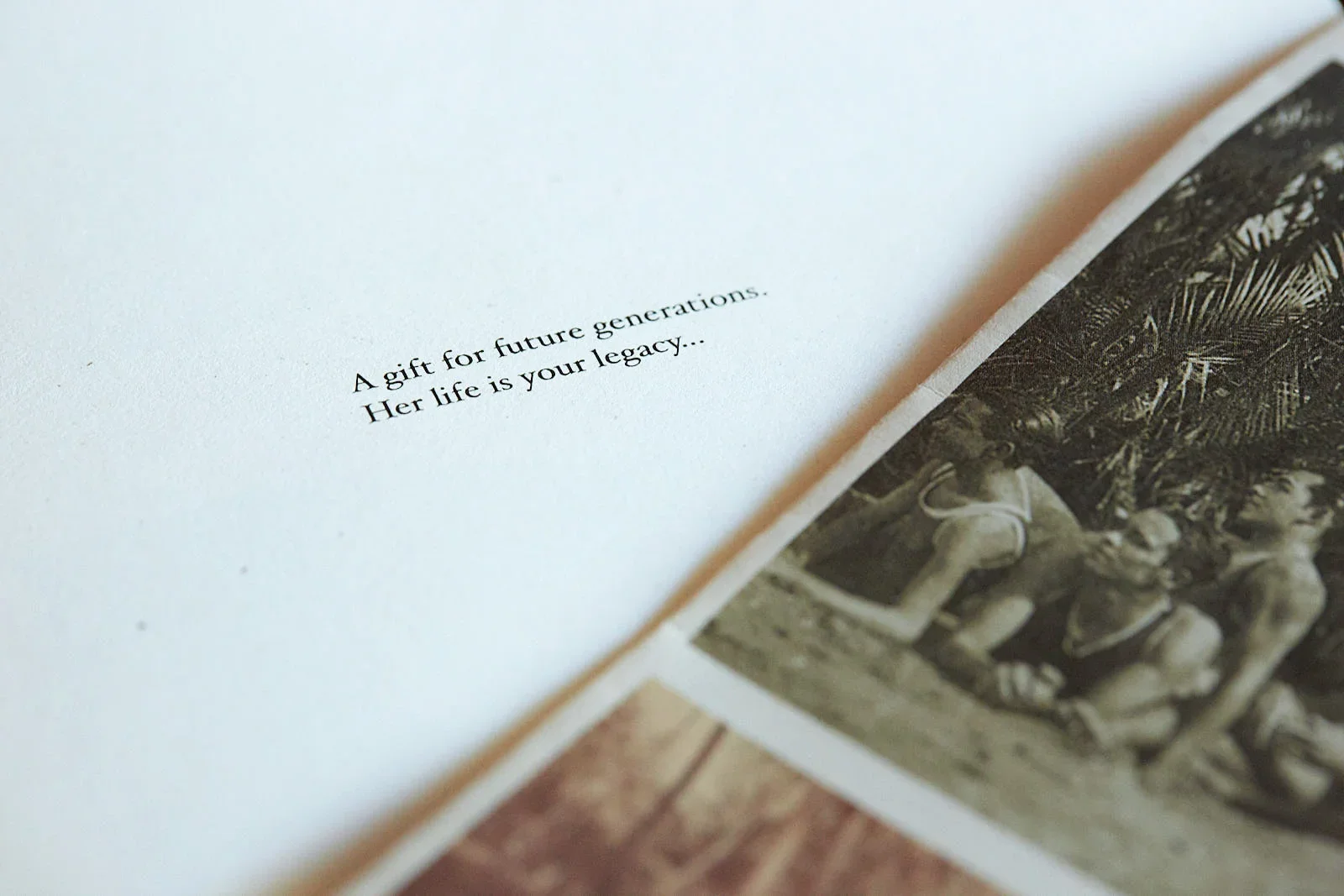
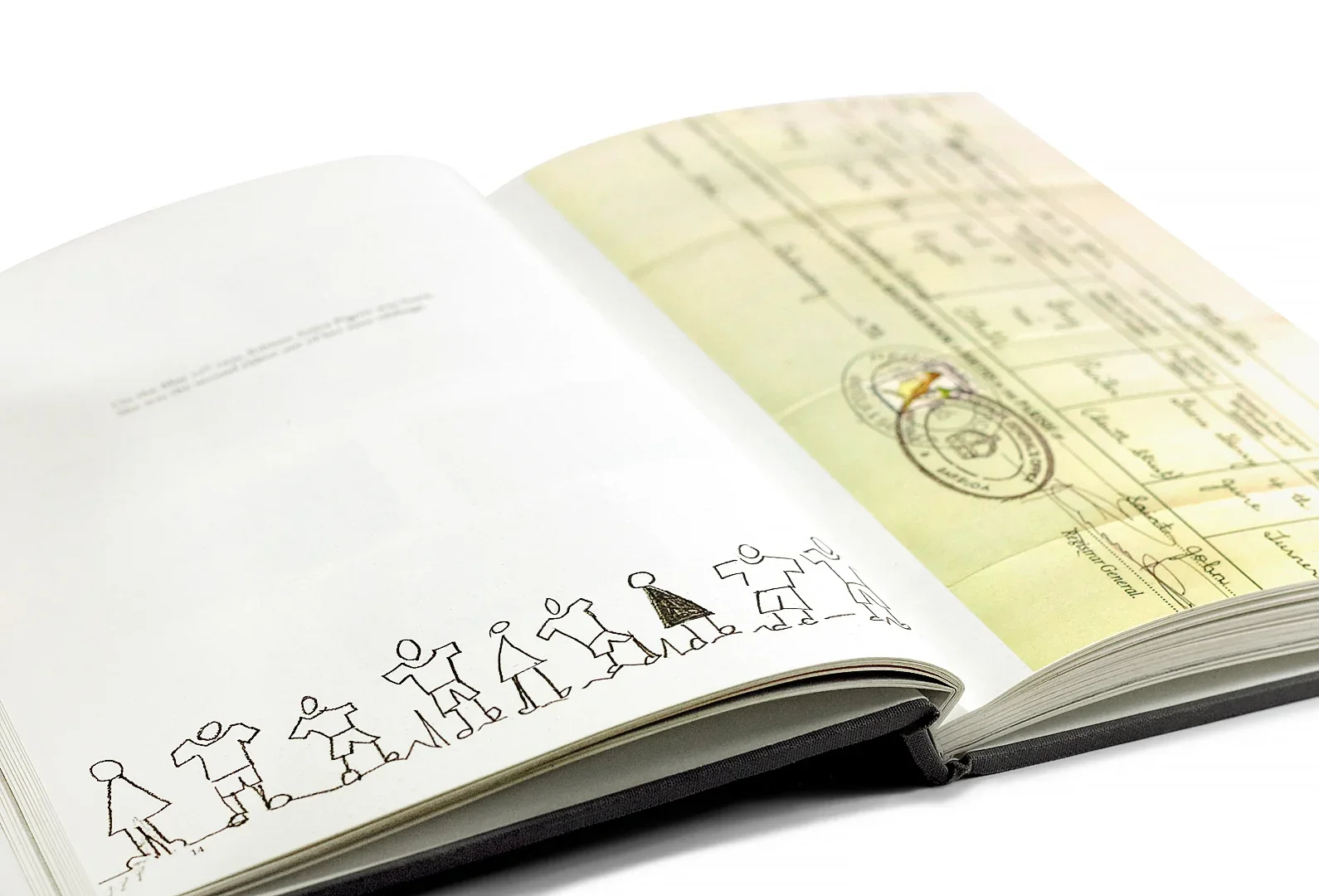
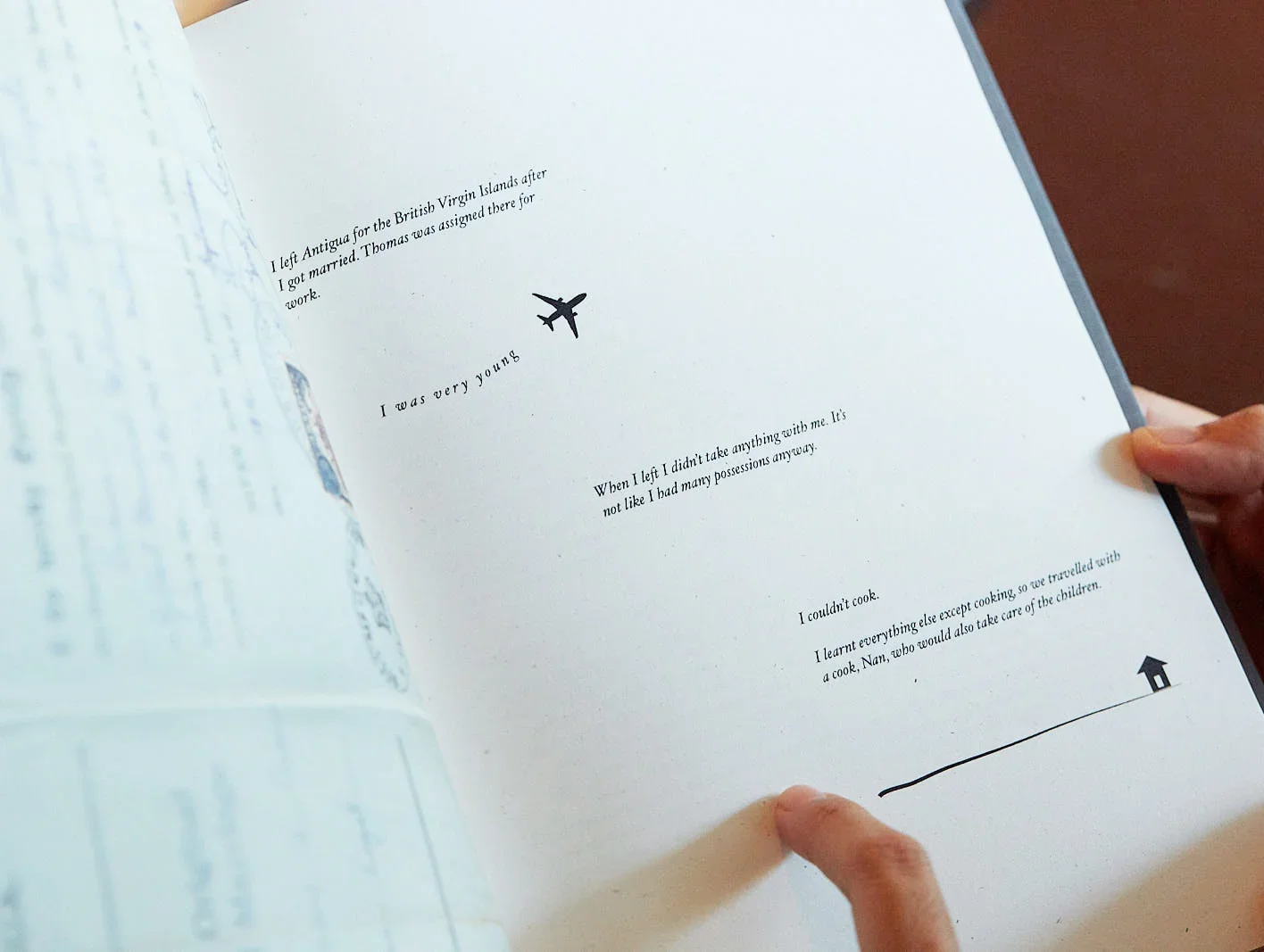
A physical book remains. It sits on a shelf. It gets pulled down at family gatherings. Children flip through it. Grandchildren discover it. It carries its context with it in a way that a folder of files in the cloud never can.
TheWaldron family commissioned their book with exactly this in mind. They saw it as a vehicle for transferring knowledge and values across generations, a permanent, tangible bridge between the people who built the family and the ones who will carry it forward.
The Window Is Open Now
Here's the uncomfortable truth: the window for capturing your family's stories is open right now, and it will close. Every year, the people who carry the richest, most detailed memories get a little older. Their recall gets a little less sharp. And eventually, they're gone, and the stories go with them.
If you're sitting on a box of "someday" (the photographs, the letters, the half-told stories you've been meaning to record) this is your sign.
Bring them out. Dust them off. Start the conversation.
Browse Plantain's portfolio to see the kind of books we create. Or just reach out for free advice if you need any. We’d love to hear from you.